Layaway is a payment arrangement that lets customers secure goods while paying in installments before the full purchase is completed. This guide explains how layaway functions in objective terms, the typical conditions that retailers apply, and how buyers can reduce risk through clear documentation, timelines, and eligibility checks.
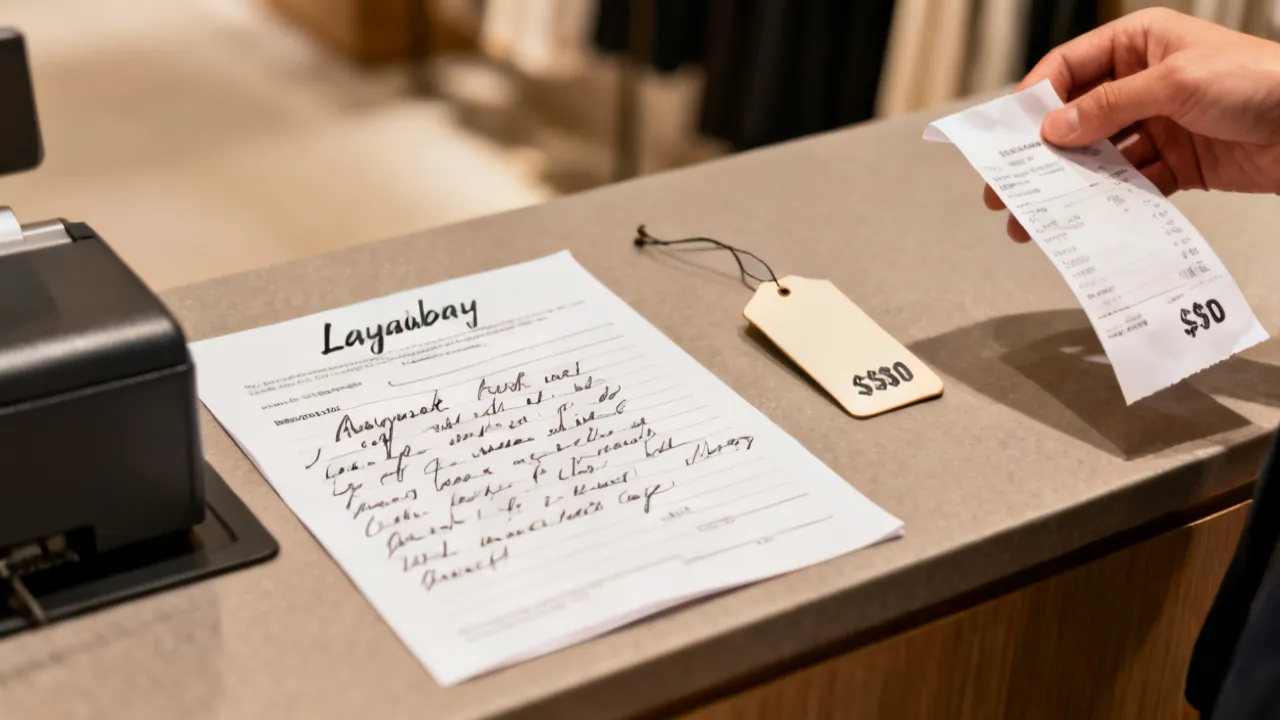
Layaway is a structured purchase plan where you reserve an item and pay toward it over time, usually in installments, until the remaining balance is settled and the goods can be claimed. For shoppers, the practical goal is budget predictability; for retailers, it is controlled inventory movement and a defined payment process that reduces uncertainty compared with unstructured reservations.
Before you begin, the critical issues are straightforward: total price (including any fees), payment schedule, deadline rules, and cancellation or forfeiture conditions. A well-run layaway agreement makes these items explicit in writing so both parties understand expectations.
Because layaway is “agreement-based” rather than “informal holding,” the biggest mistake most consumers make is treating it like a casual promise. The policies that govern what happens if you miss a payment, cancel halfway, or don’t pick the item up on time can determine whether you lose fees, lose part of your payments, or even lose the entire arrangement.
In traditional retail practice, layaway describes a reservation-and-installment model. Instead of taking an item home immediately, the customer places the item into a layaway status. Retail staff typically tag the merchandise to track it internally, while the customer pays an agreed portion on a schedule (weekly or biweekly are common patterns, though the exact cadence is retailer-specific). Once the customer satisfies the full agreed amount, the retailer releases the item.
From an industry standpoint, layaway sits between two models: direct purchase and delayed fulfillment. It can support shoppers who prefer to spread costs, while giving retailers a structured means to manage inventory and collect payments over time.
Layaway also has a behavioral dimension. It’s not just a payment plan; it’s a commitment mechanism. Retailers design their policies to encourage completion by placing guardrails around cancellations and nonpayment. In many cases, the policy is built around operational realities: the store must protect against the item being sold to someone else, track payments accurately, and manage the customer service effort required by layaway accounts.
Historically, layaway has been especially relevant during periods when households want to avoid high-interest credit but still need access to larger-ticket items. Even today, the modern layaway experience can vary widely: some retailers provide a simple, transparent plan with minimal fees, while others add multiple charges or impose strict forfeiture language.
While each retailer can structure their policy differently, the customer workflow often looks like this:
If you treat layaway as a formal agreement rather than a casual hold, you will be better positioned to meet the schedule and avoid misunderstandings.
Many customers also underestimate the “final stretch.” Even after the final payment, the transaction isn’t always automatically complete. Stores may require a claim window, require you to return with identification, or require you to complete pickup procedures during particular hours. If you’re not aware of those steps, you may think you’ve paid in full when, from the store’s perspective, you have completed the payment portion but not the pickup/claim portion.
Additionally, some retailers allow you to choose a payment method (cash, card, money order) that can affect how receipts are generated and how quickly payment is credited. If the schedule matters to you—especially if you’re near a deadline—confirm how payment posting works.
Layaway agreements are often misunderstood because customers focus on the installment amount and overlook the policy logic that governs outcomes. The terms below are usually the very consequential:
Ask for the out-the-door total for the goods you are reserving. Some retailers separate the base price from taxes or fees, while others incorporate certain charges into the quote. If there is a layaway service fee, it should be clearly indicated. If price information is displayed as a “current shelf price” without clarifying whether fees apply, request clarification before signing.
There are several common fee structures. Some stores charge a flat layaway fee (for example, a fixed amount added to the transaction). Others add a percentage. Still others may state that certain fees are “nonrefundable” even if cancellation occurs early. You don’t just want the number—you want to know the composition of the number.
Also confirm how taxes are handled. In some jurisdictions, taxes may apply to the full purchase price at the time of layaway setup, while in others taxes may be calculated based on the final amount at release. If the store collects tax up front, you may have a different refund outcome than if taxes are collected later.
Finally, check for less obvious charges. Examples include:
In a well-structured agreement, each of these is either absent or clearly disclosed and accounted for in the total.
Very layaway plans specify a payment frequency and a due date. Some policies provide grace periods; others require strict compliance. If you expect irregular cash flow—such as variable income around holidays—confirm what happens if a payment is late and whether the retailer can adjust the timeline.
Payment schedule terms often include phrases like “due on or before” a certain date, which can be stricter than customers expect. Ask whether late payments are credited immediately or only after staff verification. If a store requires payments to be made in person by a specific time, you should know that operational detail, because “late” may refer to time-of-day rather than just the calendar date.
Another nuance is how installment amounts are calculated. Some agreements maintain a fixed installment amount throughout. Others may adjust the last payment to account for rounding or fluctuating fees/taxes. If you rely on a known weekly amount, ask whether the final installment might be different from earlier payments.
Also ask whether installment counts matter. Some policies refer to missing “X consecutive payments” before termination. Others refer to missing any payment and treat it as a default. If you want flexibility, look for language that allows rescheduling after a missed payment rather than automatic termination.
Retailers commonly include rules for what occurs when a customer cancels or fails to meet payment obligations. These may involve forfeiting certain payments or fees, or they may require partial refunds under specific circumstances. The objective goal for any shopper is simple: know the downside before it becomes real.
Cancellation and forfeiture terms can be complex. They might be structured as:
To evaluate these, don’t only ask “Is it refundable?” Instead ask: “What is the refund amount formula?” For example, a store might say “You receive 50% of payments made after the first installment” or “We retain the first $25 and refund the rest,” and those details matter.
If you might cancel, also ask whether the store allows a reschedule or “pause” instead of cancellation. Some stores may move your due dates forward rather than terminate the plan, especially if the item is still available.
Even after the final payment, release may require an additional step (ID verification, pickup time window, or store hours alignment). Policies should state when and how the item can be collected.
It’s common for release to be tied to:
One of the more frustrating consumer issues can happen when people complete the payments but forget the pickup step. If you think “the store already has my money, so they must give me the item anytime,” you may be surprised. Some stores cancel or charge additional fees if you don’t pick up by a defined timeframe.
Also check whether the retailer offers any substitution option at release time. If the item is out of stock at final fulfillment (for example, the supplier cannot restock), a substitution policy might come into play. Policies vary: some stores allow alternatives of “equal or greater value,” while others require the exact item. If your layaway is time-sensitive, this is worth clarifying upfront.
Layaway remains relevant because it answers a recurring consumer challenge: aligning purchase timelines with cash flow. From the retailer side, it provides structured commitments that can reduce the likelihood of abandoned carts in categories where planning matters (for example, larger home goods, seasonal items, or planned gifting).
However, because layaway involves carrying inventory while payments are collected, retailers typically protect themselves with policy guardrails—especially around missed payments and claim deadlines. A layaway program signals that the retailer expects completion and wants to avoid operational losses tied to unused holds.
Therefore, a layaway program is not merely “holding an item.” It is a risk-managed arrangement with explicit behavioral requirements for the buyer and operational requirements for the seller.
Retailers may also offer layaway in order to reach customers who prefer not to use credit. This can be seen as inclusive from a commerce standpoint, but it also places the responsibility of understanding the agreement clearly on the customer. If a plan includes strict forfeiture language, it effectively functions like a contract with built-in cancellation costs.
From a broader perspective, layaway can also be considered a budgeting tool that competes with credit cards. The comparison isn’t just “is it cheaper.” The comparison is also “what is the risk profile.” Credit cards have interest and credit reporting considerations; layaway has forfeiture and deadlines. Different people manage those different risks better.
Layaway can be suitable when you meet two conditions: (1) you are confident you can follow the payment schedule, and (2) the total cost—including fees and any taxes—is transparent and acceptable.
It may be less suitable when:
Another practical factor is your communication ability and record-keeping. If you’re able to keep receipts and check the plan balance, you can reduce risk significantly. If you tend to forget, miss deadlines, or lose documentation, layaway might expose you to avoidable contract outcomes.
If you are uncertain, consider a “test” approach: choose an item you can afford even if you have to lose part of your payments, rather than using layaway for an essential expense that you cannot afford to jeopardize.
In many retail environments, the supplier (the brand or distribution source) provides the inventory, while the retailer administers layaway as a service policy. The customer experiences this as a store-administered plan, but the underlying inventory and availability can depend on supplier logistics.
That’s why it’s reasonable to ask two questions during setup:
Clear answers reduce friction later and keep the transaction aligned with the actual supply chain reality.
In some cases, even when a store tags an item internally, the item could still be affected by handling errors, misplacement, or system inconsistencies. A robust layaway process uses both physical tagging and inventory systems to reduce this risk. If you want to reduce uncertainty, ask how the store confirms the item’s hold status.
Another subtle point is whether your plan is tied to a specific SKU (stock keeping unit) or a broader product description. If the plan is tied to a general description (“a blue medium hoodie”), a substitution might be more likely. If the plan is tied to an exact model or SKU, replacement may be more constrained.
| Policy Area | What Retailers Commonly Require | What Often Happens If Conditions Aren’t Met |
|---|---|---|
| Eligibility | Item category eligibility; sometimes minimum purchase value; may require in-store setup | Item may not be accepted into a layaway plan or may require a different item choice |
| Payment Schedule | Fixed installment amount and due dates; proof of payment maintained by retailer | Late payment policy may trigger rescheduling, penalties, or plan termination depending on terms |
| Deadline to Complete | A stated completion window (often weeks to a few months, depending on store policy) | Failure to meet the deadline may lead to cancellation and potential forfeiture of prior payments/fees |
| Cancellation | Request in a specified manner (in-store or written request); retailer may specify refund portions | Refund may be partial or none, particularly if policy includes nonrefundable fees or administrative charges |
| Taxes and Fees | Clarification of whether taxes and any service fees are included and how they’re calculated | Total amount may change if taxes/fees apply differently than expected; lack of clarity increases risk of disputes |
| Item Release | Final payment confirmation; pickup/claim requirements; store hours and identification rules | If release windows are missed, the retailer may impose additional holds, rescheduling, or cancellation steps |
| Refundability of Paid Amounts | Policy-defined refund method and time frame; conditions for refunds | Nonrefundable portions may be retained; refund timelines may vary |
Use this table as a quick memory aid, but treat it as a starting point. The real decision hinges on the contract text or store-provided layaway terms you are given at setup.
To reduce confusion further, consider creating a simple personal system at the start. For example, note the due date for each installment on a calendar, take a photo of every receipt, and keep them together with the layaway agreement number.
Also consider what would happen if you are traveling, working late, or dealing with a family emergency. If your plan relies on a specific store visit each due date, you can be more proactive by asking whether you can pay ahead, pay online, or authorize a different payment method.
Even when customers mean well, missteps happen. The very common ones:
To avoid these, you can use a simple checklist on day one: confirm the total, confirm installment dates, confirm cancellation/forfeiture formula, confirm release/pickup requirements, and confirm what proof you will receive for each payment.
From an operational perspective, layaway systems require reliable internal processes. Items are typically tracked under a customer account. Staff must reconcile payments, prevent accidental sale to other customers, and manage cancellations appropriately. When policies are explicit and staff procedures are consistent, customers benefit from transparency—especially around final release and cancellation outcomes.
When process gaps exist—such as missing payment records or unclear release instructions—customers may face avoidable delays. That’s why payment documentation matters as a practical safeguard.
Operational realities can include:
While customers can’t control all of this, you can control your side by ensuring you always get receipts and keeping notes on key conversations.
If there is ever a dispute, your documentation becomes your “audit trail.” Even if a store staff member says “it should already be credited,” the receipt helps you verify what you paid and when.
Layaway is a contract-based transaction. While specific legal protections vary by jurisdiction and retailer policy, the objective principle is consistent: a consumer should keep evidence of agreement terms and payments. If there is a dispute, documented proof (agreement copy, receipts, and confirmation records) supports resolution.
Some shoppers also prefer to ask for:
Documentation best practices are not about mistrusting the retailer; they are about reducing risk. Contracts are only as good as the ability to confirm what was promised.
It can also help to capture:
If you later need to escalate a complaint, documentation makes it easier to show what you did and what you were told.
Additionally, some consumers find it useful to keep a running “balance sheet” for themselves (paid vs. remaining). Even if the store shows a balance, maintaining your own record reduces the chance that a system mistake becomes your problem.
No. A deposit is typically a partial payment associated with holding an item or reserving a purchase, but the structure and obligations can differ. Layaway generally refers to an installment plan with specific timelines and defined conditions for completion and release.
A key distinction is that layaway often includes a defined schedule, and it often includes forfeiture or cancellation rules tied to missed payments. A deposit can be refundable depending on the store’s return and cancellation policy, whereas layaway might be less flexible if terms specify administrative retention.
Ask for a written breakdown or confirmation of the total cost, including taxes and any layaway-related service or handling fees. If the store does not provide a clear total, request clarification before you agree to the plan.
If the store provides only an “installment price” or a “current shelf price,” treat that as incomplete information. You can still proceed if the store can confirm the final total, but don’t sign until you have a clear out-the-door figure.
Retailers apply their own nonpayment rules. Some allow rescheduling; others terminate the plan after missed installments. The agreement should specify the exact consequences, including whether any prior payments or fees may be retained.
In practice, you should also ask what you need to do to fix the problem. For instance, can you pay the missed amount immediately to stay in good standing? Is there a “reactivation” step? Does the store require a manager approval? Clarifying these steps beforehand can save you time and frustration later.
Often, cancellation triggers a policy-defined outcome. Refundability may be partial or may exclude nonrefundable fees. The only reliable answer is the retailer’s written layaway terms you sign or receive.
When asking about cancellation, request the formula or the example timeline. “Partially refundable” is vague; “You receive X% or $Y back after Z date” is clearer.
Usually, the item is released after the final payment is confirmed, but release may depend on store procedures. You may need to return during specific hours, present identification, or complete a pickup confirmation.
Also ask whether the store calls you when it’s ready. If they don’t, you need a system for follow-up: verify the day your item should be ready and check in before you travel.
In many cases, the item is reserved (tagged or accounted for) during the layaway term. However, you should confirm how availability is handled if inventory constraints occur—especially for popular or seasonal products.
If the item is high-demand, there may be extra rules: for example, requiring a higher deposit, restricting substitutions, or limiting the time between installments. Ask what happens if demand causes inventory to run low.
No. While the concept is consistent, installment schedules, fees, deadline windows, and cancellation outcomes vary widely. Compare terms across retailers when possible.
If you’re comparing two stores, focus on the “worst-case scenario” rather than just the installment amount. The store with slightly lower weekly payments might have higher nonrefundable fees or stricter forfeiture clauses that make it costlier if anything goes wrong.
If the retailer can modify the schedule or release under special conditions, they may offer an adjustment. Otherwise, you may need to consider an alternative payment arrangement or another purchase option.
Some stores allow paying the remaining balance early to release immediately. If that’s an option, ask about any processing requirements or whether early release is automatic or requires staff approval.
Typically, the supplier provides the inventory to the retailer. The retailer administers layaway for the customer. If supply changes occur, it can affect availability, so it’s reasonable to ask how replacements or alternatives are handled.
It’s also helpful to understand whether the item is “in stock at the store” or “ordered through the supplier.” If it’s being ordered, the layaway schedule might be affected by delivery lead times, and that could create different risks for missed pickups or cancellation.
Because layaway practices are retailer- and jurisdiction-specific, there is no single universal model. For consumer-facing policy interpretation, the very reliable approach is to consult the applicable retailer’s written layaway terms and the relevant consumer protection framework in your locality. For general consumer contract and dispute-resolution concepts, reputable guidance is typically provided by government consumer protection agencies and established legal resources. In the U.S., for example, the Federal Trade Commission (FTC) and state consumer protection offices provide general guidance on consumer rights and unfair or deceptive practices. For Canada, the Competition Bureau and provincial consumer protection agencies serve a similar role. Always verify policies directly with the retailer because the operative terms are contractual.
Source note (non-exhaustive): consumer protection guidance is commonly published by government agencies such as the FTC (U.S.) and provincial/state consumer protection offices; contract principles are also discussed through legal information services and courts’ public materials.
Layaway can be a sensible budgeting tool when you want to reserve an item and pay over time under clear conditions. The safest path is to confirm the full price, understand installment timing, document each payment, and read—then re-read—the cancellation and deadline terms. When those elements are transparent, layaway becomes less of a leap of faith and more of a structured purchasing method grounded in documented expectations.
Think of layaway as a three-part promise: (1) you promise to pay on schedule, (2) the store promises to reserve and release according to policy, and (3) both sides accept that there are consequences if conditions aren’t met. If you understand those three parts clearly before you commit, you can use layaway more confidently and protect yourself from avoidable surprises.
And if anything about the agreement feels vague—especially around fees, missed payments, cancellation outcomes, or pickup deadlines—pause. Clarify before signing. In most situations, a good retailer will be able to explain the terms calmly. If they cannot, or if the information is inconsistent across staff members, that inconsistency itself is a signal worth taking seriously.
Striking the Perfect Balance: Navigating Premiums and Out-of-Pocket Expenses in Senior Insurance Plans

Explore the Tranquil Bliss of Idyllic Rural Retreats

How to Make Lasting Memories at Disneyland Attractions

4rkojvsx Technology: Industry Insights and Buying Guide

Affordable Phones and Plans for Seniors

Affordable Full Mouth Dental Implants Near You

Unlock the Top Kept Secrets to Finding Your Ideal Dentist for Flawless Dental Implant Results!

Discovering Springdale Estates

Unveiling RS Sul Telecom Services


Understanding Joao Clemente Souza Itau Via Pix Code
This guide explains what the identifier “Joao.clemente.de.souza..itau.via.pix.294.629.912.00” typically signals in a payment context, and how to validate it safely. Objectively, the “Pix” ecosystem in Brazil enables fast transfers, but identifiers and merchant references must be checked carefully to prevent misattribution. You’ll also find practical conditions, a comparison table, and FAQs for responsible handling.

Guide to Sourcing Parts with 02380476573
This guide explains how to evaluate and manage sourcing inquiries using the reference number 02380476573, while focusing on responsible supplier selection and transparent purchasing workflows. Background information covers what a sourcing inquiry should include, how supplier traceability matters, and why request clarity reduces delivery and specification risk in the supply chain.

PayPal Unbanked: A Practical Guide for Digital Payments
This guide explains how PayPal Unbanked works for people who may not have a traditional bank account. It provides objective background on the “unbanked” concept and digital payment rails, then breaks down eligibility, setup considerations, and risk controls, so you can make informed choices about account access and everyday purchasing.

Paypal Unbanked: Digital Payments for People Without Banks
Paypal Unbanked options help people manage everyday payments when traditional bank access is limited. This guide explains how “unbanked-friendly” payment flows generally work, what to verify before choosing a provider, and which compliance steps matter. Background covers digital wallet basics, account funding methods, and practical risk controls.

Calcard Sinop: Expert Guide to Use and Sourcing
Calcard Sinop is a medicine-brand reference commonly discussed by people seeking clarity on active ingredients, safe use, and sourcing. This guide explains what “Calcard Sinop” typically relates to in pharmacy practice, how to compare suppliers responsibly, and what conditions matter before purchase or use—grounded in general, objective medicine-safety principles and regulatory expectations.
Understanding Joao Clemente Souza Itau Via Pix Code
This guide explains what the identifier “Joao.clemente.de.souza..itau.via.pix.294.629.912.00” typically signals in a payment context, and how to validate it safely. Objectively, the “Pix” ecosystem in Brazil enables fast transfers, but identifiers and merchant references must be checked carefully to prevent misattribution. You’ll also find practical conditions, a comparison table, and FAQs for responsible handling.
